




01 · Sound scene
MoreSound Technology
Designed to keep useful sound information available while helping the listener access speech in changing environments.
Zeal is unusual because it combines discretion with features that very small in-ear devices often sacrifice: rechargeability, AI-based sound processing, modern wireless connectivity and flexible dome-to-micro-mould fitting.
South African stock, technology level and accessory availability are confirmed when quoting.

Traditional IIC and CIC hearing aids can be extremely discreet, but the smallest shells often have limited space for rechargeable batteries, wireless antennas and controls. Zeal takes a different route. It is a ready-to-fit in-ear device rather than a conventional custom shell.
That distinction matters clinically. It means a patient can potentially get an in-ear form factor with rechargeability and contemporary connectivity, without automatically committing to a manufactured custom shell.
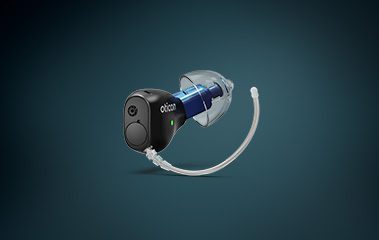
Zeal is built on Oticon's Sirius platform with DNN 2.0 and MoreSound processing. Those technologies help analyse complex sound scenes, but the benefit still depends on hearing loss, speech understanding and the quality of the fitting.
Designed to keep useful sound information available while helping the listener access speech in changing environments.
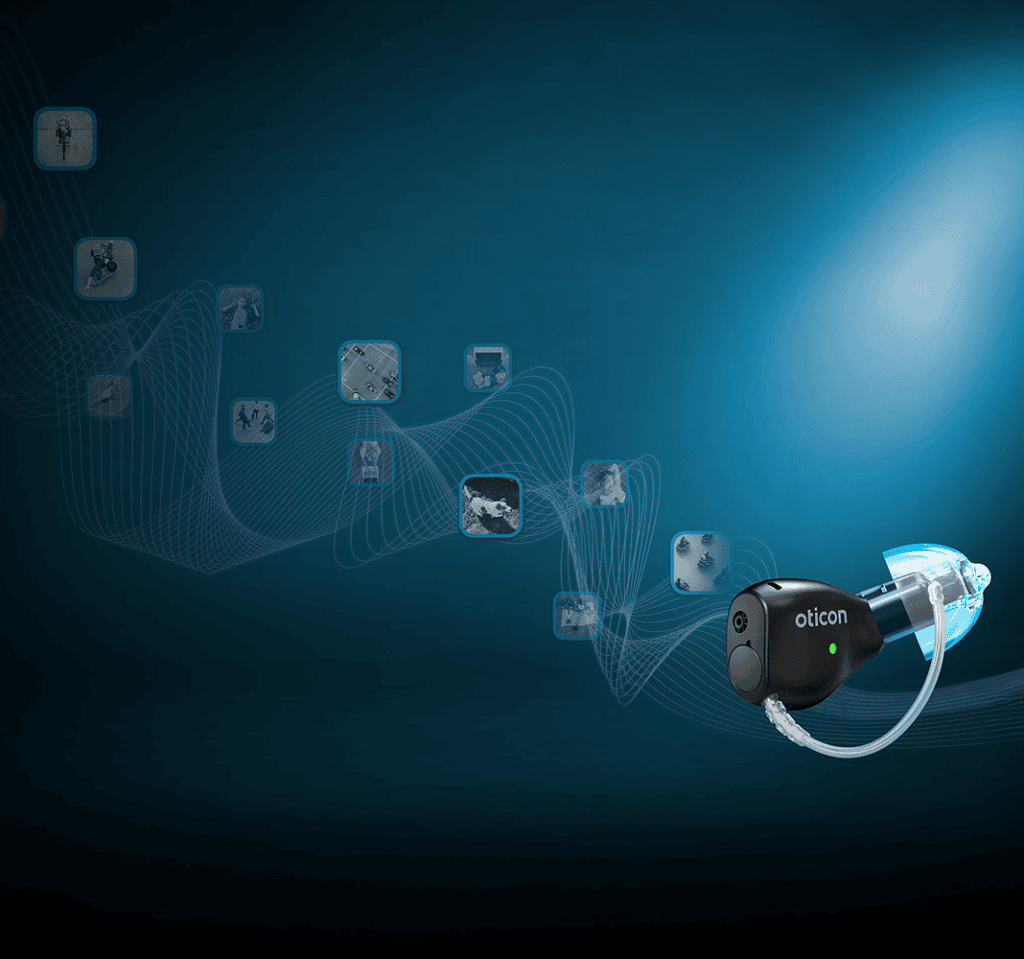
A trained neural network contributes to how the device analyses complex acoustic patterns. It does not understand language or replace the listener's own auditory processing.
Oticon uses an encapsulation approach that encloses the device body as a compact solid structure. The manufacturer rates Zeal to IP68 for dust and moisture resistance. That does not make a hearing aid indestructible or suitable for swimming, but it is relevant for a device that sits in the ear canal environment.
Unlike a conventional custom hearing aid, Zeal can be fitted using a dome when anatomy and acoustics allow. That can create a same-day fitting route. A micro mould remains available when retention, comfort or acoustic control requires a more individual coupling.
Otoscopy, hearing thresholds, speech results and canal anatomy come first.
Where clinically suitable, a dome can allow an immediate physical fit without waiting for a custom shell.
Comfort, feedback, occlusion and movement determine whether the initial coupling is actually good enough.
An impression and micro mould can be considered when the ear needs a more secure or controlled acoustic fit.
Same-day fitting is an option, not a promise. Candidacy depends on the individual ear and hearing loss.
The strongest reason not to choose Zeal is also the simplest: the device still has to fit the ear and the hearing loss properly.
Book a candidacy assessment →The degree and shape of the hearing loss affect gain, feedback risk and venting requirements.
Canal size, shape, retention and comfort matter more than how small the device looks in a product photograph.
Wax production, moisture and skin health affect maintenance and reliability.
Dexterity and vision should be tested in the room, not assumed from age.
Rechargeable ready-to-fit in-ear device versus custom IIC/CIC shell.
Compare → Most flexible RICZeal vs IntentIn-ear discretion versus broader receiver and coupling flexibility.
Compare → Newest flagshipZeal vs RevealDiscreet in-ear form factor versus Oticon's newest Dual AI flagship route.
Compare → Budget + fundingPrices + medical aidUnderstand what changes a South African Oticon hearing-aid quote.
Read guide →No, not in the conventional custom-shell sense. Zeal is a ready-to-fit in-ear device that can use a dome or micro mould depending on anatomy and acoustic needs.
It can be when a suitable dome coupling works for the ear and hearing loss. A micro mould may require an impression and manufacturing time.
Yes. Oticon uses a built-in lithium-ion battery. Actual daily battery life depends on hearing loss, streaming, features, battery age and listening conditions.
Oticon positions Zeal around Bluetooth LE Audio and Auracast-capable connectivity. Exact functionality depends on the hearing-aid configuration, phone, operating system and accessory support.
No hearing aid should be treated as waterproof for daily use. Oticon rates Zeal to IP68 under specified testing conditions, which indicates resistance to dust and moisture but does not make it suitable for swimming or unrestricted water exposure.
Benefits vary by South African scheme, plan, available funds and authorisation rules. The practice can prepare a quote and clinical supporting documentation where appropriate.
Our Bryanston practice sees patients from Sandton and greater Johannesburg for hearing-aid assessment, comparison, fitting, REM verification and follow-up.