
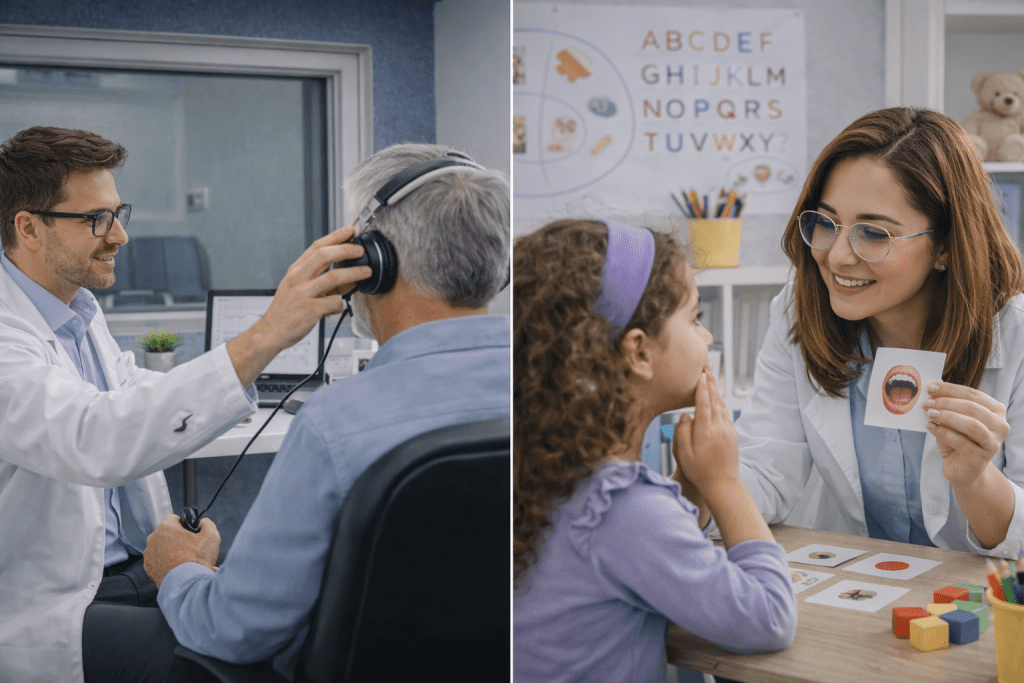
A person can pass a standard hearing test and still struggle to follow speech in noise, keep up with rapid instructions or make sense of what was heard. That does not automatically mean auditory processing disorder, but it does mean the listening difficulty deserves a closer look.
What does an auditory processing concern look like?
Auditory processing refers to how the brain makes use of sound once it has reached the auditory system. Everyday concerns may include:
- difficulty understanding speech in busy classrooms, restaurants or group conversations
- frequent requests for repetition even when the speaker is audible
- mishearing similar-sounding words
- difficulty following long or multi-step spoken instructions
- listening fatigue by the end of the school or work day
- needing visual information, written instructions or subtitles to support understanding
These experiences can be real and significant. They can also overlap with language, attention, memory, literacy and learning demands. That overlap is one reason the first step should be careful assessment rather than guessing the label.
Why hearing is considered first
Before an auditory processing difficulty is interpreted, peripheral hearing and middle-ear status need to be considered. A hearing problem, fluctuating middle-ear difficulty or another ear-related issue can create listening complaints that look similar in daily life.
The purpose of the hearing check is not to dismiss the concern when hearing thresholds are normal. It is to make sure the starting information is accurate.
Why questionnaires and previous reports matter
Listening difficulties often appear differently in the clinic than they do in real life. A quiet one-to-one appointment may not reproduce the demands of a noisy classroom, open-plan office or fast family conversation.
Depending on the case, the audiologist may ask for information from the individual, parent, teacher or another professional. Previous speech-language, educational, psychological or occupational therapy reports can also help clarify whether the concern is mainly auditory, broader, or overlapping.
What happens before APD testing?
Suitability comes before the test battery. The audiologist considers the person’s age, developmental profile, language abilities, hearing status, ability to participate reliably, and the specific real-world complaint.
Not every person who struggles to listen needs the same tests. In some cases, another assessment may need to happen first or alongside the auditory work-up.
What can the outcome include?
The useful outcome is not simply a test score. Feedback may include:
- a clear explanation of the pattern seen
- a written report where appropriate
- home, classroom or workplace strategies
- communication and environmental recommendations
- therapy recommendations
- referral for another assessment where the listening concern overlaps with a different area
When should you consider booking?
Consider asking for guidance when the same listening problems are happening repeatedly and are affecting learning, work, participation or confidence. You do not need to know whether the problem is APD before contacting the practice. Describe what happens in everyday life and the team can guide the correct starting point.