




Written by Zainub Pahad, Audiologist
An APD assessment looks beyond a standard hearing test.
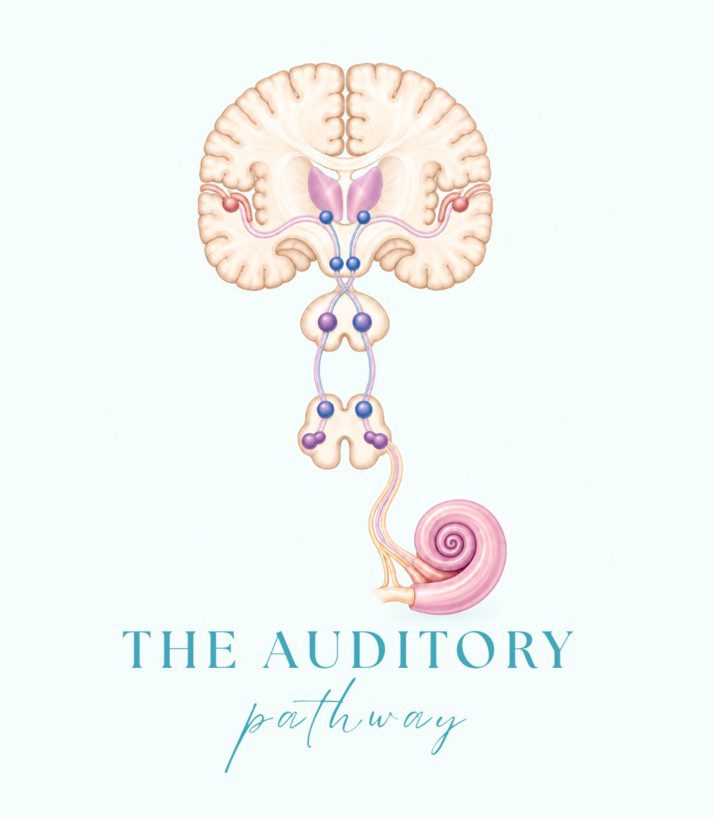
The purpose is not simply to determine whether a child can hear sound, but to understand how efficiently the auditory system processes the sound once it has been detected.
Assessment
Peripheral hearing is assessed first so that hearing loss or middle-ear difficulties can be identified or excluded.
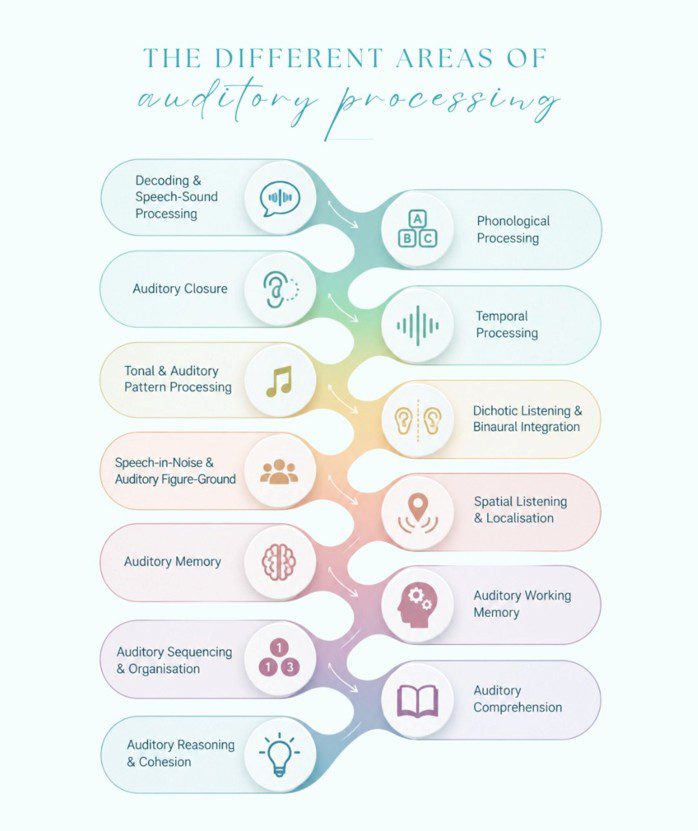
Once adequate access to sound has been established, specialised auditory-processing tasks may be used to investigate areas such as:
- speech-sound processing
- listening in noise
- auditory closure
- temporal and tonal processing
- dichotic listening
- spatial listening and localisation
- auditory memory
- sequencing and organisation
- comprehension and reasoning.
No single test tells the whole story.
Assessment findings should therefore be considered alongside: case history, parent observations, teacher feedback, school performance, previous professional assessments and functional listening concerns.
This is particularly important because auditory-processing difficulties may overlap with difficulties involving: attention, language, executive functioning, learning, processing speed and emotional or sensory regulation.
Diagnosis
The goal of assessment is not simply to identify low scores.
The aim is to understand:
- What does this child’s auditory system do well?
- Where does it struggle?
- How is this affecting everyday listening and learning?
APD profiles may therefore look very different between children.
One child may primarily struggle with speech in noise, while another may have greater difficulty with decoding, auditory memory, dichotic listening or temporal processing.
Diagnosis therefore guides an individualised management plan, rather than applying the same therapy programme to every child.
What happens after diagnosis?
Management generally involves three complementary areas.
1. Direct Auditory-Processing Therapy
Therapy aims to directly train the auditory skills identified as vulnerable during assessment.
Depending on the child’s profile, therapy may target speech-sound processing, phonological skills, auditory closure, rapid auditory processing, tonal and temporal processing, dichotic listening, binaural integration, speech-in-noise, localisation, auditory memory, sequencing, comprehension and auditory reasoning.
Activities should progress from simple, controlled listening tasks toward increasingly functional listening situations.
The aim is gradual development without overwhelming the auditory system.
2. Home Programmes and Auditory Training
Auditory training does not need to stop when the therapy session ends.
Targeted home activities provide additional opportunities to practise specific auditory skills between sessions. These may include auditory memory games, increasingly complex instructions, story listening and retelling, auditory sequencing, sound-pattern activities and structured digital auditory-training programmes.
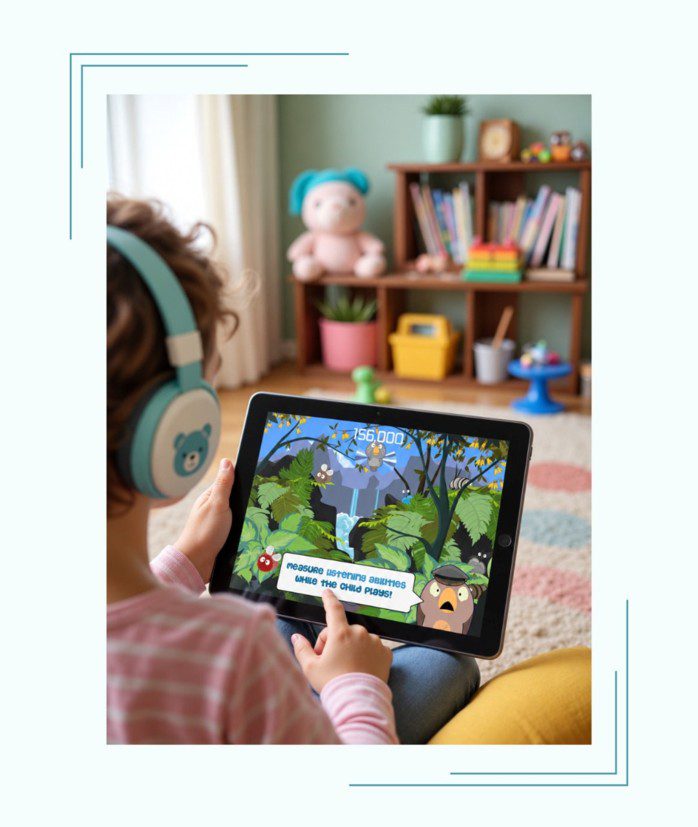
Our practice also uses Acoustic Pioneer auditory-training programmes, selected according to each child’s assessment findings and individual auditory-processing profile. These programmes are designed to provide structured, repeated listening practice at home while remaining clinically supported and monitored by the audiologist. The aim is not simply to “play an app,” but to strengthen specific auditory skills through consistent practice.
The programmes target different areas of auditory processing:
- Zoo Caper Skyscraper: Targets dichotic listening, binaural integration and divided auditory attention.
- Elephant Memory: Targets auditory working memory, sequencing and following multi-step directions.
- Insane Earplanes: Targets auditory discrimination, frequency resolution and speech-sound clarity
- Sound Surge: Targets spatial processing and understanding speech in competing noise.
Not every child requires every programme. App selection is based on the child’s assessment results, functional listening difficulties and individual auditory profile. Some children may require one programme, while others may benefit from a combination targeting several auditory-processing systems.
Consistency is important. Auditory training works through repeated, structured listening practice, with the aim of strengthening and reorganising the neural pathways involved in processing sound. Progress should therefore be monitored, with training frequency and recommendations adjusted where necessary.
The focus remains on short, consistent and purposeful practice, rather than overwhelming the child with lengthy exercises.
3. Classroom and Environmental Support
While therapy works on strengthening the underlying auditory skills, the listening environment can also be modified to reduce unnecessary auditory demand.
Helpful strategies may include:
- preferential seating
- reducing unnecessary background noise
- gaining the child’s attention before speaking
- facing the child while giving important information
- combining verbal and visual instructions
- breaking long instructions into smaller sections
- allowing additional processing time
- checking understanding
- rephrasing rather than simply repeating.
For individuals who continue to experience significant difficulty in demanding listening environments, assistive listening technology such as a remote microphone system may also form part of an individual management plan.
Therapy Should Move Beyond the Therapy Room
Successful auditory-processing intervention is not simply about becoming better at an auditory game.
The more important questions are:
- Can the child follow the teacher more easily?
- Can they remember longer instructions?
- Do they need less repetition?
- Can they understand speech more successfully in background noise?
- Can they follow and retell a story?
- Are reading and spelling tasks becoming less effortful?
- Are they more confident participating in class?
Therapy therefore gradually progresses from controlled exercises toward functional listening activities that resemble real-world environments.
The aim is not simply to achieve better auditory-processing test scores.
The aim is to help the child listen with less effort, process information more accurately, participate more confidently and access learning more effectively.