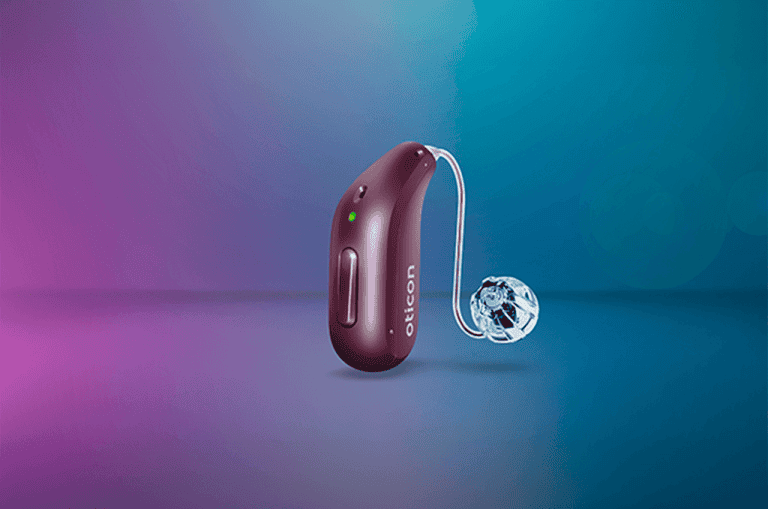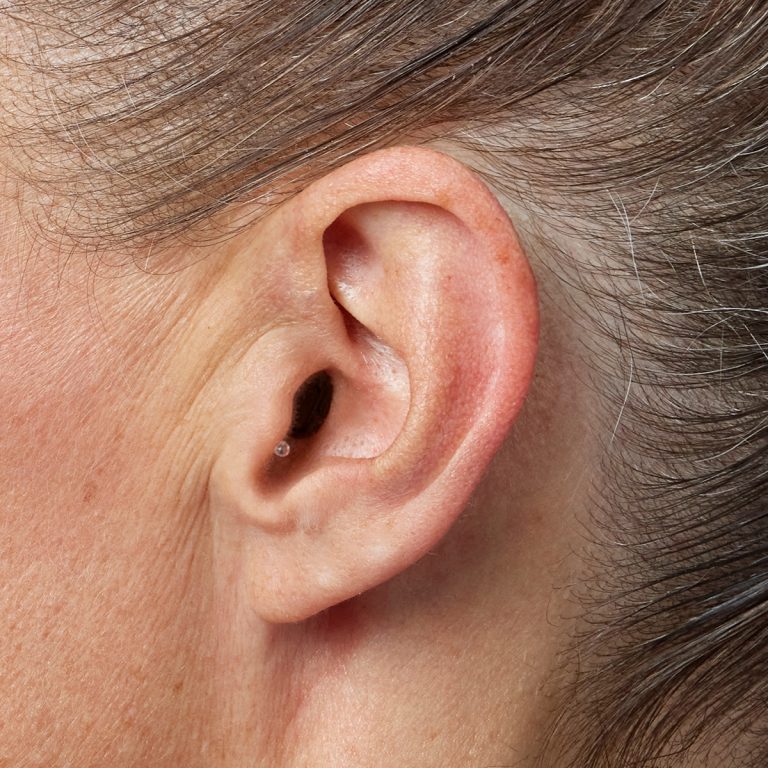




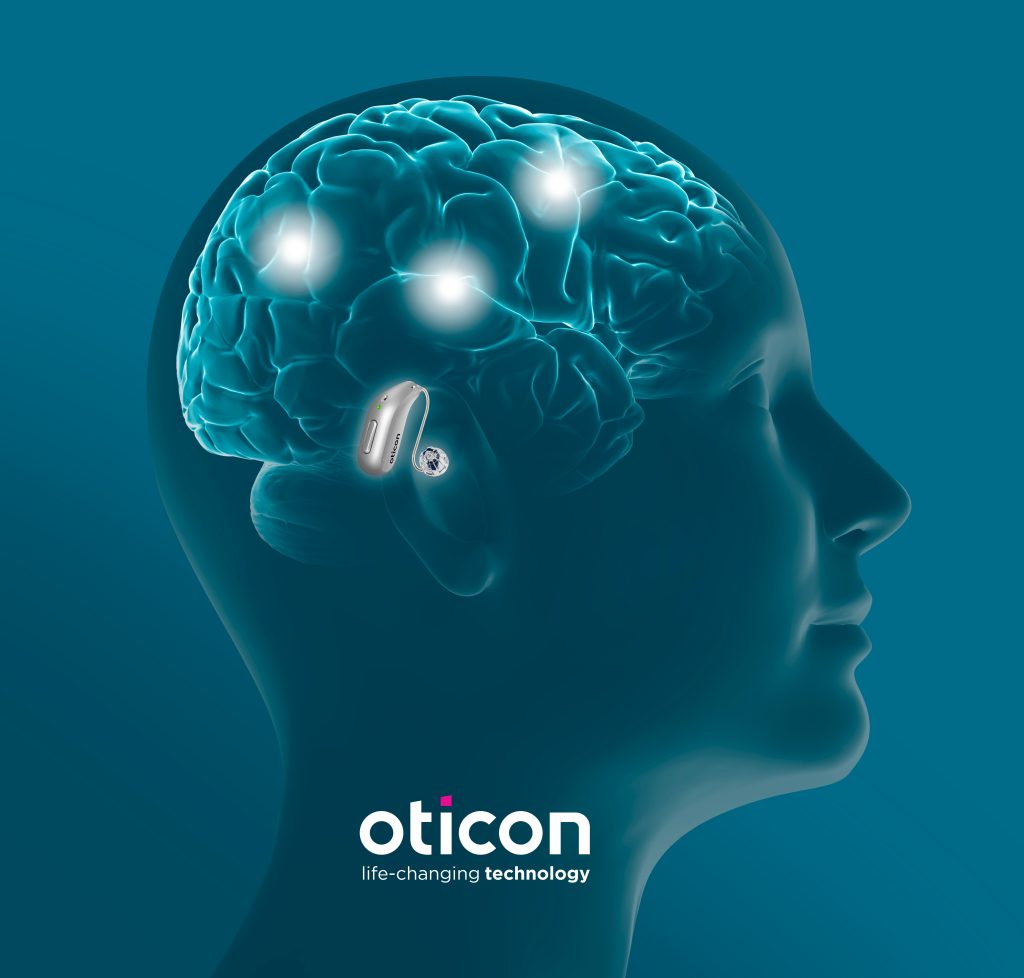
Oticon uses the terms BrainHearing and Deep Neural Network across several hearing-aid generations. Those phrases can sound like marketing shorthand, so it helps to separate the clinical idea from the product language.
What is BrainHearing?
Hearing happens in the auditory system, not only in the ear. The ears provide access to sound, while the brain must organise, separate and interpret that information. Oticon’s BrainHearing philosophy is built around giving the brain access to a broader, useful sound scene rather than treating every sound outside the dominant speech signal as unwanted.
What is a Deep Neural Network in a hearing aid?
A Deep Neural Network, or DNN, is a trained pattern-recognition system. In Oticon hearing aids it is used as part of the sound-processing strategy to help analyse complex sound environments. The system has been trained on large numbers of sound scenes so it can contribute to decisions about how the hearing aid handles the environment.
Does AI mean the hearing aid understands speech?
No. A hearing aid does not understand a conversation the way a person does. AI-based processing analyses acoustic patterns and applies rules learned during training. The wearer still relies on their own auditory system, language knowledge, attention and cognition to make sense of speech.
How has Oticon’s AI processing changed?
Different Oticon generations use different platforms and versions of neural processing. Oticon Intent combines advanced sound processing with 4D user-intent sensors. Own SI brings advanced processing into very small custom IIC/CIC devices. Oticon Zeal uses Oticon’s current AI platform in a discreet rechargeable in-ear format, while Jet PX brings AI-enabled processing into an essential-level range.
What do the 4D sensors add?
Intent adds information about head movement, body movement, conversation activity and the acoustic environment. That gives the system contextual clues about the listening situation in addition to the sound analysis itself.
Does BrainHearing replace good audiology?
No. A sophisticated platform cannot compensate for an incorrect hearing-loss prescription, inappropriate coupling, blocked ears, poor handling or unrealistic expectations. Hearing-aid technology is one part of the treatment process.
Why real-ear measurement still matters
The manufacturer can estimate output using acoustic models, but every ear canal is different. Real-ear measurement helps verify the sound delivered in the individual ear against prescribed fitting targets. AI processing and REM answer different questions, and both can matter.
What about speech discrimination?
If speech understanding is significantly reduced even when sound is audible, increasing hearing-aid sophistication does not automatically restore normal clarity. Speech testing helps set realistic expectations and may affect whether conventional amplification, CROS/BiCROS or another management route is appropriate.
Does newer AI always mean a better hearing aid?
Not for every patient. Device style, hearing-loss range, ear anatomy, dexterity, connectivity, budget and previous experience can matter as much as the processing generation. A patient may be better served by a simpler hearing aid that fits reliably than by a flagship product that is difficult to manage.
Oticon hearing-aid assessment in Bryanston
At our Bryanston practice we compare Oticon technology with other major manufacturers for patients from Sandton and greater Johannesburg. We use the hearing results and the patient’s daily listening priorities to decide whether a particular platform is likely to add useful value. Explore our Oticon hearing aids overview or compare hearing-aid brands for the broader decision.