
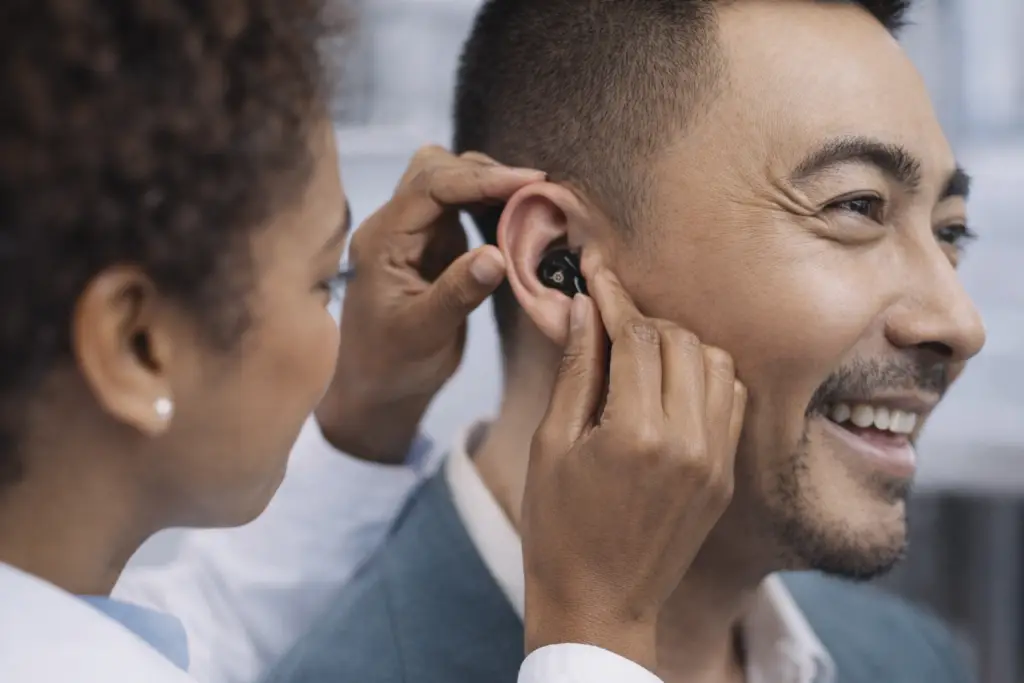
It is easy to start hearing-aid research with a brand name. Online searches quickly turn into model comparisons, technology levels and feature lists. But the best starting question is not “Which brand is best?” It is “What problem does the hearing aid need to solve for this person?”
The hearing test comes before the logo
Hearing aids are fitted to a hearing profile, but the audiogram is only part of the decision. The audiologist also considers speech understanding, the shape and condition of the ear, dexterity, vision, phone use, daily listening environments, previous hearing-aid experience and the patient’s priorities.
Two people with similar hearing thresholds may need very different solutions because their lives are different.
Start with the listening problem
Think about the situations that are genuinely difficult:
- restaurants and family gatherings
- meetings or classrooms
- one-to-one conversation
- television and streaming
- phone calls
- hearing over distance
- single-sided hearing difficulty
These priorities help narrow the useful technology routes more effectively than choosing a manufacturer first.
Consider handling and comfort
A technically impressive device is not useful if it is difficult to insert, charge, clean or control. Important practical questions include:
- Do you prefer rechargeable devices or disposable batteries?
- Can you manage small controls comfortably?
- Would a custom in-ear style suit the ear and hearing needs?
- Is discretion important?
- Do you need higher power or specialist accessories?
Connectivity can matter, but it is not the whole fitting
Phone compatibility, app control and streaming are important for many patients. They should be checked against the devices you actually use. At the same time, a hearing aid should not be chosen only because the app looks attractive. Real-world speech understanding, comfort and reliable follow-up remain central.
Why follow-up matters
Hearing-aid care does not end when the device is collected. Follow-up allows the audiologist to review comfort, handling and real-life listening, then make adjustments where needed.
A well-supported device from a suitable brand can outperform a poorly matched premium device that is never reviewed after fitting.
What about Phonak, Oticon, Starkey and Signia?
Each manufacturer has strong technology routes. The useful comparison is not about declaring one universal winner. It is about identifying which current family, style and feature set best fit the patient’s hearing profile and priorities.
That is why an independent comparison is valuable: the logo comes after the clinical fit.
What should you bring to a hearing-aid consultation?
- previous hearing results if available
- current hearing aids and accessories
- the phone or devices you use most often
- a list of the situations where hearing is hardest
- medical aid information when benefits or documentation may be relevant
Explore hearing aids and compare brand pathways in Bryanston.