
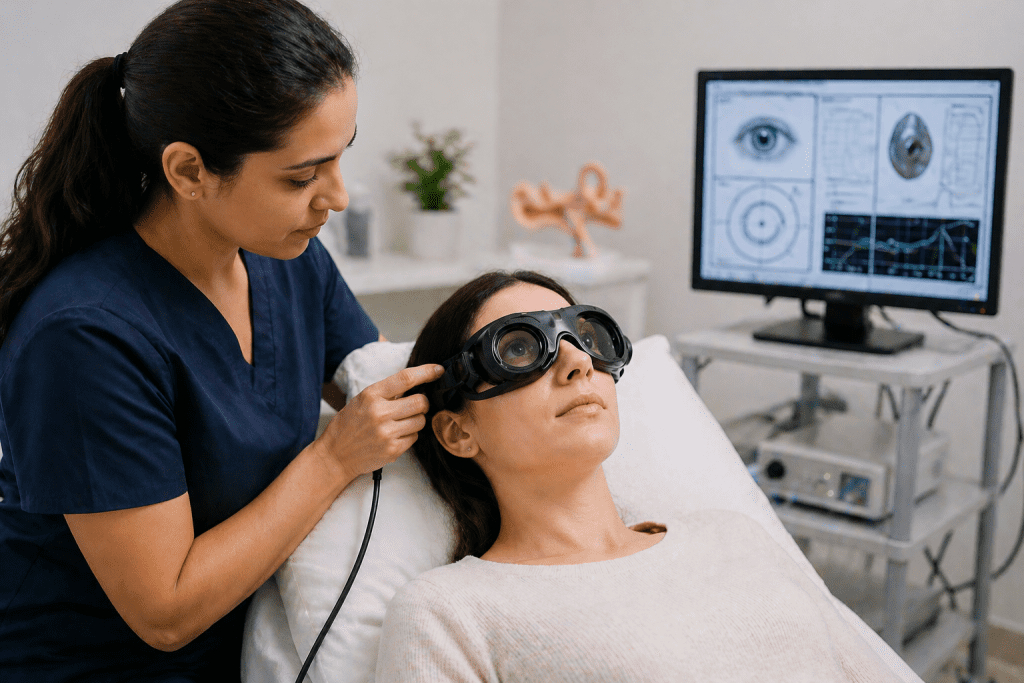
“Dizzy” can mean very different things. One person may feel that the room is spinning. Another may feel unsteady, light-headed, pulled to one side or unsafe when walking in the dark. These differences matter because the pattern of the symptom helps guide the assessment.
Start by describing the feeling
Before the appointment, think about which description comes closest:
- spinning or rotational vertigo
- rocking or floating
- unsteadiness when walking
- brief symptoms when turning in bed or looking up
- symptoms triggered by busy visual environments
- a general sense of imbalance
You do not need to choose the diagnosis. The goal is simply to describe the experience as clearly as possible.
Timing and triggers are important
Useful details include:
- when the problem started
- how long each episode lasts
- whether symptoms are constant or episodic
- what movements or environments trigger them
- whether hearing, tinnitus or ear pressure changes at the same time
- whether there are falls or near-falls
Keeping a short symptom diary can be helpful when episodes are difficult to remember.
What is vestibular audiology?
The vestibular system is closely connected to the inner ear and helps contribute to balance and spatial orientation. Vestibular audiology considers whether the symptom pattern may involve this system and what further testing, referral or rehabilitation pathway may be appropriate.
Not every dizziness complaint comes from the inner ear. A careful assessment should keep that wider picture in mind.
What should you bring?
- a medication list
- previous hearing or balance test results
- ENT, neurology or other relevant reports
- details of recent falls
- a brief symptom timeline
If you use hearing aids, bring them as well.
What can happen after the assessment?
Depending on the findings and the scope of the appointment, the next step may include further vestibular testing, hearing assessment, medical referral, rehabilitation guidance or another specialist pathway.
The aim is not to force every patient into one diagnosis. It is to organise the symptom pattern and guide the safest, most relevant next step.
When should you seek urgent medical care?
New severe neurological symptoms, sudden major weakness, difficulty speaking, loss of consciousness or other acute medical warning signs require urgent medical assessment rather than a routine vestibular appointment.
Explore vestibular audiology and balance-related care in Bryanston.