




Onset
Did it begin suddenly or gradually, and what was happening around the time it started?
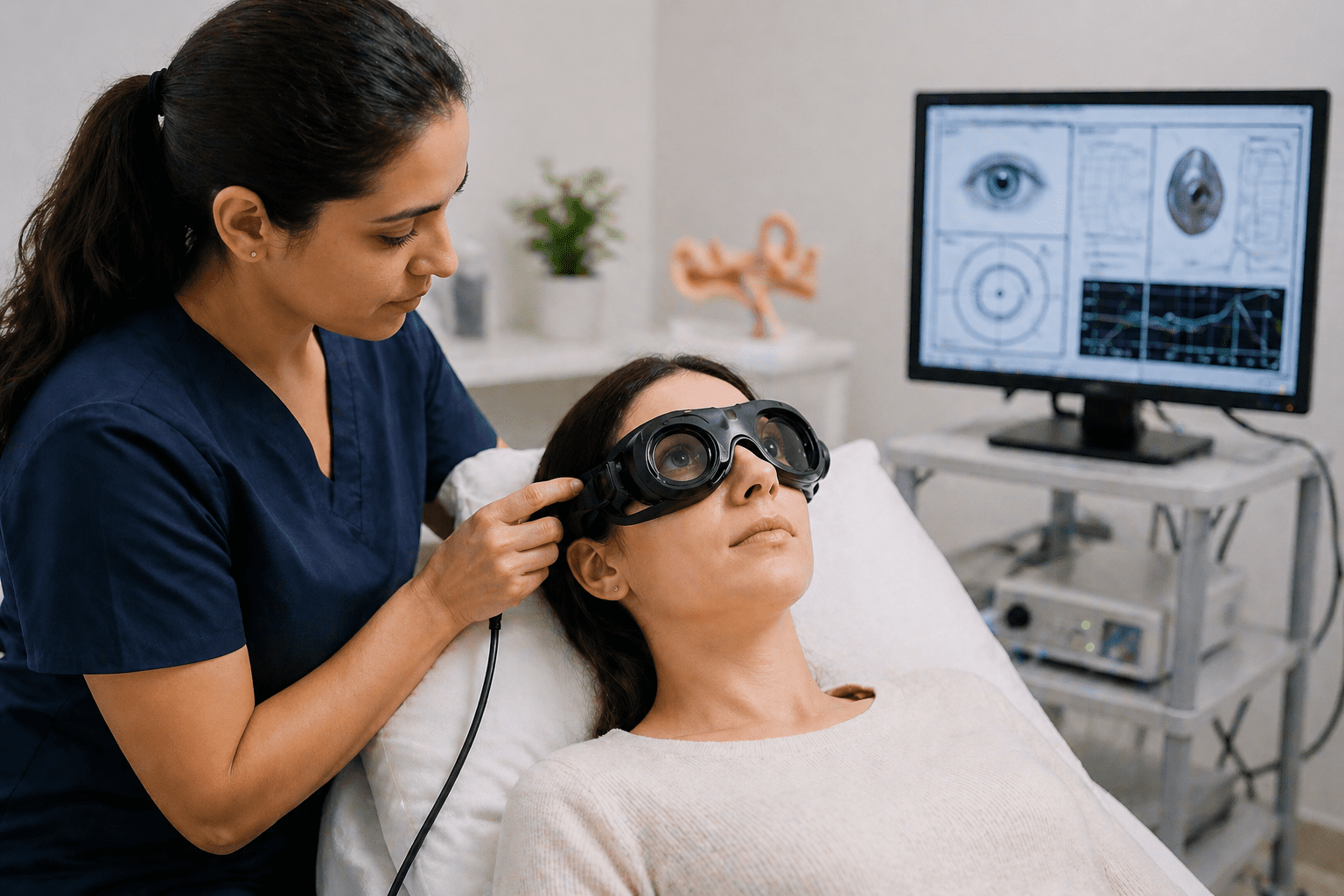
Vestibular audiology helps organise dizziness, vertigo and imbalance symptoms, consider whether the inner ear or hearing system may be contributing, and guide the most appropriate next step when the picture points elsewhere.
The exact words do not have to be perfect. What helps most is describing the sensation, when it happens, how long it lasts and what seems to trigger it.
Your brain combines information from several systems to work out where the body is, how it is moving and how to stay stable. Vestibular assessment considers the ear within that wider picture.
Before the appointment, it can help to notice these details. They often provide more useful information than simply rating how “bad” the dizziness feels.
Did it begin suddenly or gradually, and what was happening around the time it started?
Do episodes last seconds, minutes, hours, most of the day or continuously?
Does it happen with position changes, head movement, standing, exertion or without an obvious trigger?
Does hearing, tinnitus, pressure or fullness change during or around the episode?
Headache, visual changes, nausea, falls, neurological symptoms and medication changes may all matter.
Seek urgent medical care if dizziness occurs with new weakness or numbness, facial droop, difficulty speaking, sudden severe headache, loss of consciousness, chest pain or other acute neurological symptoms. Sudden hearing loss also requires urgent assessment.
The exact appointment is guided by the history and clinical question. Relevant audiology and balance-related assessment is used to organise the findings rather than forcing every patient through the same test sequence.
Prepare for your appointmentTiming, triggers, ear symptoms, medical history, medication and the effect on daily function are discussed.
Relevant ear examination, hearing or middle-ear information may be considered where clinically appropriate.
Appropriate vestibular or balance-related measures are selected according to the clinical picture and scope of the appointment.
Findings are considered alongside the symptom pattern rather than interpreted in isolation.
You receive clear feedback on audiology follow-up, monitoring or referral where another professional should be involved.
A useful assessment does not have to end with an ear diagnosis. Sometimes the most valuable outcome is identifying which professional or pathway should take over next.
No. Dizziness can arise from many systems. Vestibular audiology helps determine whether the ear and hearing system may be contributing and whether another referral is more appropriate.
Dizziness is a broad term. Vertigo usually describes a false sense of movement or spinning. Your description of the sensation is useful, but the full symptom pattern matters more than the label alone.
Yes. The hearing and balance organs are both located in the inner ear, so hearing change, tinnitus, pressure or fullness can be relevant when they occur with dizziness.
You can contact the practice directly. The team can guide whether vestibular audiology is an appropriate starting point or whether medical assessment should come first.
Bring relevant ENT, hearing, neurological or balance reports if available, a medication list, and any notes about symptom timing, triggers and associated hearing changes.
Describe what you are feeling, when it happens and any hearing or ear symptoms that occur with it. The practice can guide the most appropriate starting point.
Your preferred date and time are a request. The practice will contact you to confirm the appropriate appointment and clinician.